
Mount Everest Expedition (8,848m) – South Col Route
The world’s highest mountain.
Guided Climbing on Everest with Altitude Junkies.

Mount Everest Expedition
51 Days

5 Excellent
Everest Expedition Cost & Inclusions
Altitude Junkies (P) Ltd. offers one of the most cost-effective full-service expeditions to EVEREST in the Khumbu region of the Nepalese Himalaya.
We don’t advertise an expedition price and then ask for additional payments at the conclusion of the expedition, such as Sherpa summit bonus and kitchen staff gratuities, as some other operators do. The price you pay the Junkies is the final price.
This expedition is offered with a 1:1 Sherpa to climber ratio. There is no western leader from Altitude Junkies Inc. present on the expedition.
Everest is technically less demanding than peaks such as Cholatse or Ama Dablam but its extreme altitude, long summit day, and unpredictable weather make it one of the world’s greatest mountaineering challenges. Unlike technical 6,000 m peaks, success on Everest depends more on acclimatization, endurance, sound decision-making, and efficient movement over snow, ice, and fixed ropes from Camp II to the summit.
Leadership
A seasoned Everest veteran Sherpa with multiple summits will assist a climber during this expedition.
Helicopters
We utilize helicopters from Kathmandu flying to Namche. The Lukla fixed-wing flights are very weather dependent, and we believe helicopters are a safer option. At the conclusion of the expedition, we will take helicopter flights from Basecamp back to Kathmandu.
The Trek to Base Camp
After arriving at Namche by helicopter, we will start the 8-day trek to Base Camp. Each evening we will stay in the best teahouse lodges on route, and our Sherpa staff will supervise all food preparation in the lodge kitchens. We will take cautious acclimatization rest days at Namche Bazar and Dingbuche.
Base Camp
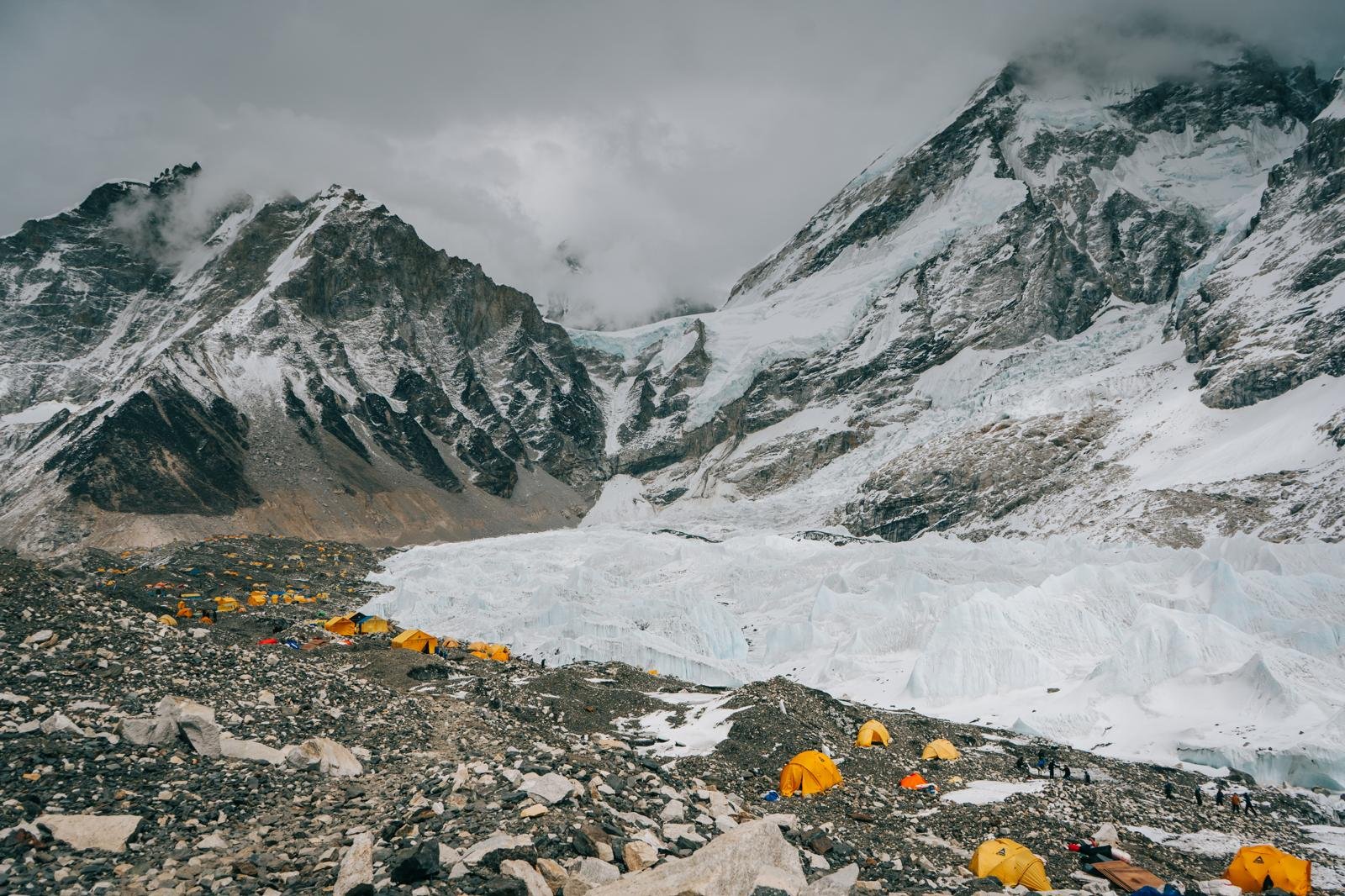
Our base camp is as luxurious, if not more so, than some of the other more expensive operators in the Khumbu, and the food prepared by our highly experienced cooks is considered some of the best available in the Himalayas.
Each climber is provided with a personal Black Diamond 3-person tent at base camp, which is insulated with a foam floor covering and complemented with an extra-thick foam mattress.
We provide a carpeted, heated, and solar-lit dining tent. We make it a policy at Altitude Junkies to remove all human waste from base camp and have porters carry our toilet drums to a lower village where it can be disposed of properly.
Climb Strategy
Altitude Junkies follows a traditional South Col strategy, focusing on gradual acclimatization, efficient movement, and maximizing the summit window rather than rushing the mountain. Climbers spend several weeks trekking to Everest Base Camp and completing multiple acclimatization rotations through the Khumbu Icefall, Western Cwm, Lhotse Face, and South Col before making a summit attempt. The strategy is to climb high, sleep low, allowing the body to adapt naturally while conserving energy. Summit day is only attempted after favorable weather, sufficient recovery, and confirmation that the route is safe. We maintain a 1:1 Sherpa to climber ratio, ensuring close support, continuous monitoring, and sound decision making throughout the expedition.
Climbing Itinerary & Route
Breakdown Khumbu Icefall & High Camps (Camps I – IV)
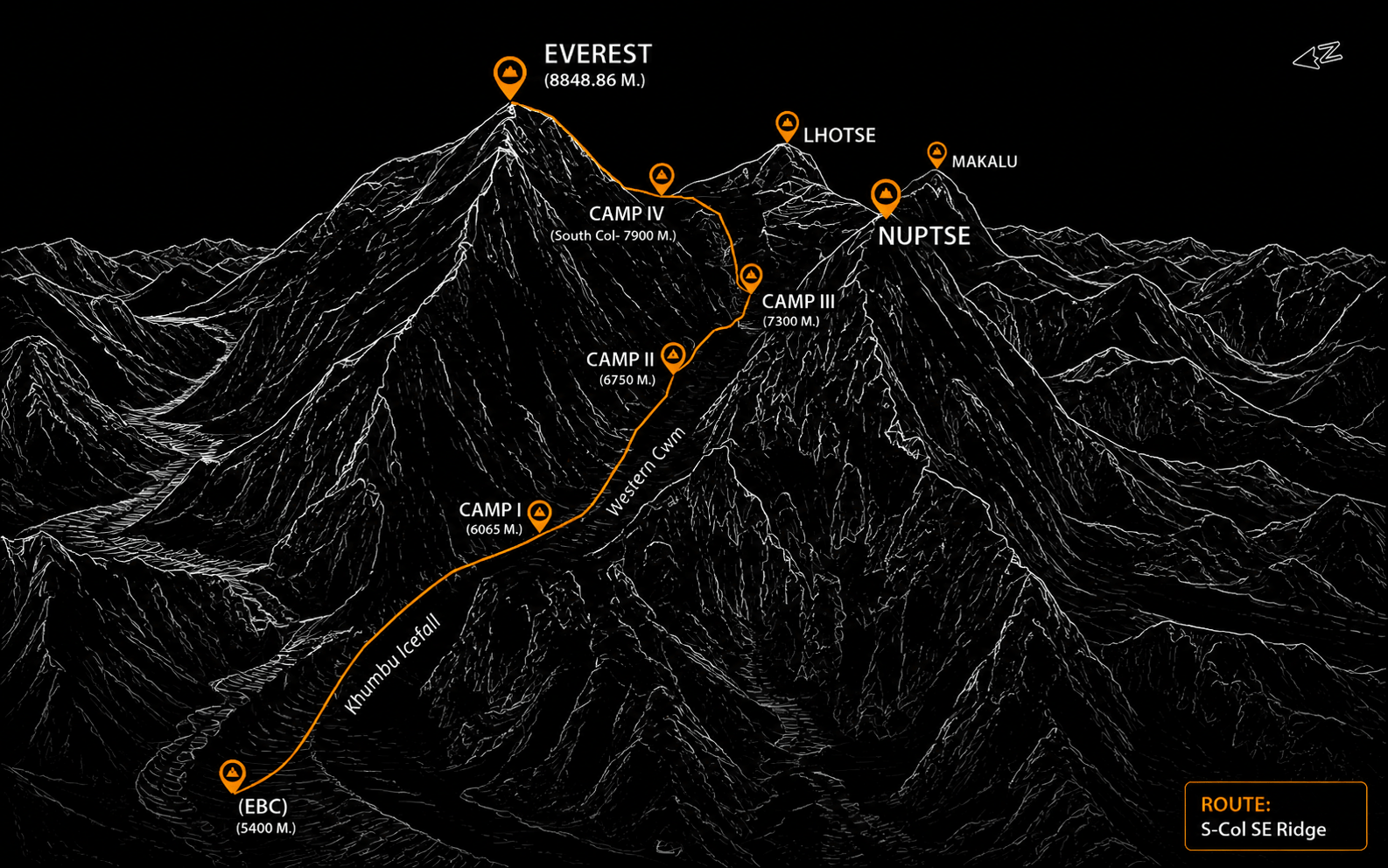
- BASE CAMP (5,364m): The expedition begins at Everest Base Camp, where climbers spend several days acclimatizing, preparing equipment, and receiving technical training before entering the Khumbu Icefall.
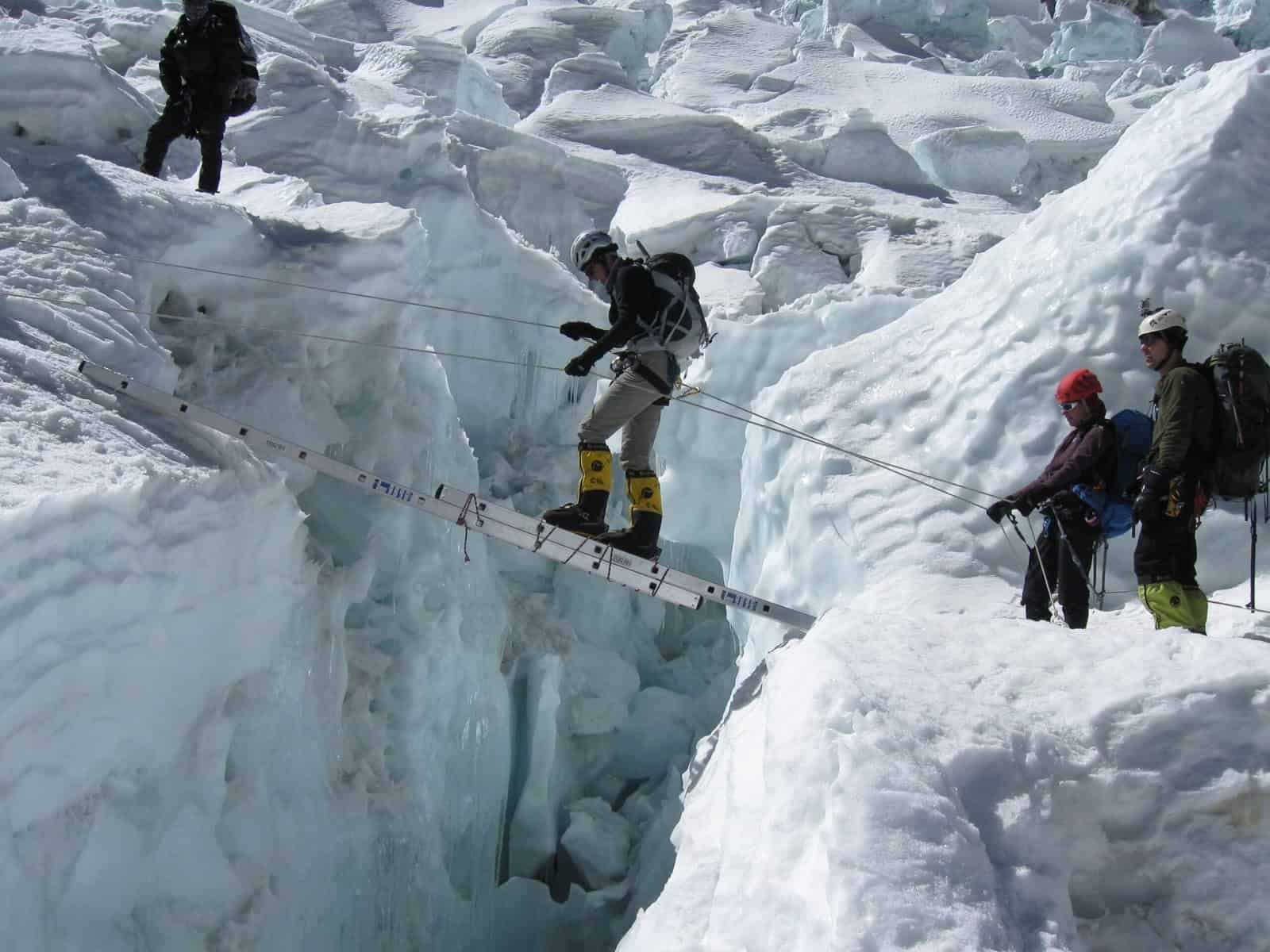
- CAMP I (6,040m): The route crosses the Khumbu Icefall, one of the most dynamic sections of the climb. Climbers navigate ladders, fixed ropes, crevasses, and towering seracs before reaching Camp I.
- CAMP II (6,400m): From Camp I, the route follows the broad glacier of the Western Cwm to Camp II. This is the main operational camp where climbers rest, recover, and prepare for higher rotations.
- CAMP III (7,300m): Above Camp II, climbers ascend the steep Lhotse Face using fixed ropes. Camp III is established on narrow platforms cut into the ice and is typically used during acclimatization and the summit push.
- CAMP IV (7,900-8,000m): The climb continues up the upper Lhotse Face, passing the Yellow Band and Geneva Spur before reaching Camp IV on the South Col. This is the final camp before the summit and the starting point for the summit push.
- SUMMIT (8,848m): Climbers leave Camp IV around midnight, ascending the Triangular Face, the Balcony (8,400 m), the South Summit (8,749 m), and the exposed summit ridge before reaching the summit of Mount Everest (8,848.86 m). After a brief stay on top, climbers descend carefully back to Camp IV and continue to lower camps as conditions allow.
High Altitude Camps
3-person tents will be used at high camps, and these will be occupied by two persons. All high-altitude food, stoves, and cooking gas will be in place, and members are only required to carry their own personal gear during the expedition.
Outline Itinerary
Day 1
Kathmandu (Hotel)
Day 2
Kathmandu
Day 3
Fly to Namche Bazar (Teahouse)
Day 4
Namche Bazar (Teahouse)
Day 5
Trek to Tengboche (Teahouse)
Day 6
Trek to Pangboche
Day 7
Trek to Dingboche
Day 8
Dingboche
Day 9
Trek to Lobuche
Day 10
Trek to Everest Base Camp
Day 11- 48
Climbing Period
Day 49
Fly out from Base Camp
Day 50
Kathmandu
Day 51
International Departure
Expedition Gear

Insurance
Climbers are required to have evacuation and medical insurance, and we recommend using Global Rescue
Cost Includes
Logistics, Safety & Requirements
1:1 Sherpa Guide Ratio & Oxygen Systems
Logistic & Transportation
- International airport pick-up and drop-off in Kathmandu.
- Domestic transportation throughout the expedition.
- Kathmandu – Lukla – Kathmandu helicopter or flight (as per itinerary).
- Cargo transportation for expedition equipment.
Kathmandu
- 4 nights’ hotel accommodation (twin sharing).
- Welcome and farewell dinner with the expedition team.
Permit & Government fee
- Everest Climbing Permit.
- Khumbu Rural Municipality Entry Permit.
- Sagarmatha National Park Permit.
- Khumbu Icefall route fee.
- Summit route fixing fee.
- Garbage management and environmental fees.
- Government Liaison Officer with all associated expenses.
Base Camp Services
- Private Altitude Junkies Everest Base Camp.
- Individual sleeping tent with mattress and pillow.
- Dining tent, kitchen tent, communication tent.
- Toilet and shower tents.
- Tables, chairs, lighting and charging facilities.
- Solar power system for charging electronics
Accommodation & Meals
- Tea house accommodation during the trek.
- Freshly prepared breakfast, lunch and dinner throughout the expedition.
- Unlimited boiled drinking water, tea and coffee at Base Camp.
Climbing Support
- 1:1 professional Everest climbing Sherpa.
- Experienced Expedition Leader.
- Base Camp Manager.
- Base Camp Sirdar.
- Camp II Cook and support staff.
- Porters for expedition loads to Base Camp.
- High-altitude equipment allowance for climbing Sherpa.
High Camp Services
- Camp II dining and kitchen tent.
- High-altitude food and cooking facilities.
- Fixed ropes where required.
- Cooking gas and stoves.
Oxygen & Safety
- 6 bottles (4L) of supplemental oxygen per climber.
- 4 bottles (4L) of oxygen for each climbing Sherpa.
- Summit oxygen mask and regulator.
- Backup oxygen cylinders available at Base Camp (chargeable if used).
- Daily weather forecasts.
- Walkie-talkie communication.
- Satellite phone for emergency use.
- Comprehensive first aid and emergency medical equipment.
- Standby climbing Sherpa for emergency support.
Insurance
- Medical, accident, and helicopter rescue insurance for all Nepali expedition staff.
Equipment
- Expedition duffel bag (if required).
- Group climbing equipment.
- Communication equipment.
Expedition Completion
- Everest Summit Certificate issued by the Department of Tourism.
- Government taxes and company service charges included.ight
The expedition cost does not include
- Airfare to and from Nepal
- Meals and drinks in Kathmandu
- Alcoholic beverages in Kathmandu
- Bottled beverages, showers and snack food on trek
- Nepal visa costs
- Evacuation costs, medical and rescue insurance
- Personal climbing clothing and equipment
- Personal Puja contribution
Altitude Junkies (P) Ltd. does not allow any solo climbing above base camp on any of our expeditions.
Price:
Duration:
Difficulty:
Location:
$48,000
51 Day
Extreme
Khumbu

Expedition Photo Gallery
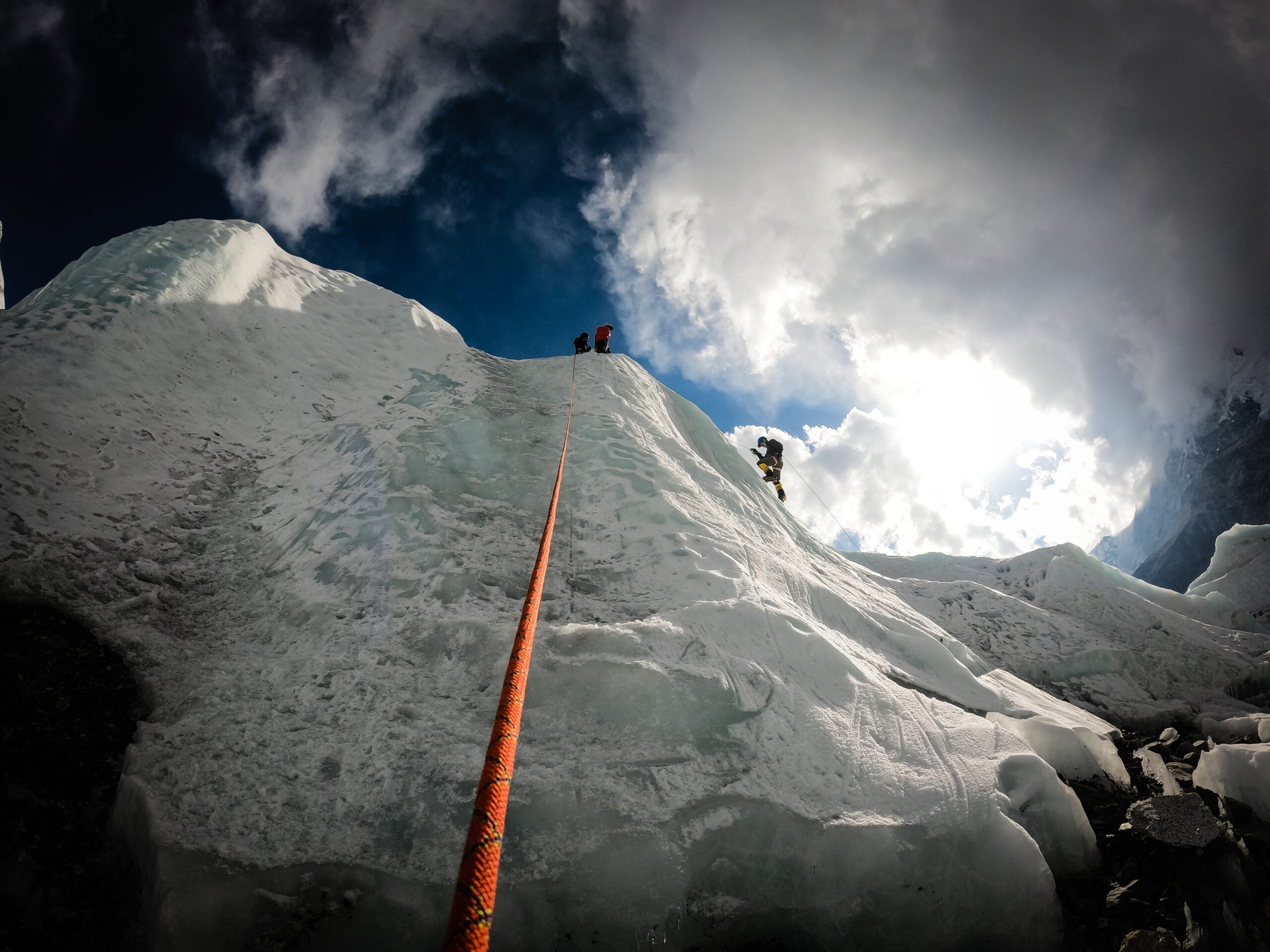
From navigating the Khumbu Icefall to the final South Col summit push, explore real moments captured on our guided Mount Everest expeditions.


Everest Expedition FAQs: Essential Climbing Tips & Gear
Get essential answers on expedition costs, 1:1 Sherpa ratios, oxygen allocations, climbing requirements, and South Col route logistics for our full-service Mount Everest summit strategy.
What should I know before planning an Everest expedition?
Before planning, understand that Everest is not a first major mountain. Most climbers should already have experience on glaciated peaks, fixed ropes, crampons, exposed terrain, and multi-week expeditions. A qualified Mount Everest guide (Sirdar) or expedition operator can help assess whether your background is appropriate and explain the route, acclimatization schedule, support level, and risk management approach.
To evaluate which model suits your experience, compare guided vs. independent expeditions.
Good expedition preparation starts months, often years, before arrival. You need endurance training, strength work, technical practice, and mental readiness for discomfort, delays, cold, and uncertainty.
What are the climbing gear essentials for Everest?
Climbing gear essentials vary by operator and route, but Everest equipment must be expedition-grade and tested before departure. Do not bring new, unproven boots, gloves, packs, or layering systems directly to the mountain.
Typical essentials include:
– Double or triple high-altitude boots with compatible crampons
– Down suit or high-altitude parka and insulated pants
– Layering system for base, mid, shell, and extreme cold protection
– Harness, ascender, carabiners, helmet, and safety lanyards
– Glacier glasses, goggles, mitts, liner gloves, and face protection
– Sleeping bag rated for severe cold, expedition duffels, and personal medical basics
Your guide should provide a final gear list and confirm what is supplied versus what you must bring.
How should I train for expedition preparation?
Training should build aerobic capacity, leg strength, carrying ability, and recovery discipline. Long hikes with a weighted pack, stair climbing, uphill intervals, strength training, and steady endurance sessions are all useful. Technical refreshers are also important, especially rope movement, ladder crossings, crampon technique, and self-care in extreme cold.
A simple preparation checklist includes:
1. Build a progressive training plan.
2. Complete practice climbs at altitude when possible.
3. Test all personal equipment in cold conditions.
4. Review nutrition, hydration, and sleep strategies.
5. Discuss medical concerns with a qualified professional.
Your guide should provide a final gear list and confirm what is supplied versus what you must bring.
What high altitude tips help climbers stay safer?
The most important high altitude tips are to ascend gradually, communicate symptoms early, hydrate consistently, and respect rest days. Headache, nausea, dizziness, confusion, unusual fatigue, or coordination problems should never be ignored. Summit ambition must not override health.
Climbers should move at a sustainable pace, eat even when appetite is low, protect skin and eyes from sun exposure, and keep hands and feet warm before they become numb. Acclimatization rotations are not wasted time; they are central to expedition safety.
What are the biggest expedition safety concerns on Everest?
Major expedition safety concerns include altitude illness, avalanches, falls, crevasses, frostbite, storms, exhaustion, and crowding on technical sections. Weather windows can be short, and delays can increase fatigue and oxygen use. A strong team like ours, planning matters as much as individual fitness.
Ask any operator about guide ratios, oxygen strategy, emergency communication, medical support, evacuation planning, and turnaround rules. Clear decisions made before summit day reduce pressure when conditions become difficult.
What Everest climbing tips improve summit-day decision-making?
The best Everest climbing tips are simple but difficult to follow under pressure: start prepared, move steadily, protect your energy, and turn around when conditions require it. Summit day is not the time to discover gear problems, pacing issues, or uncertainty with fixed-line systems.
Follow your guide’s instructions, monitor your own condition honestly, and avoid comparing your pace with other teams. Reaching the summit is only half the climb; safe descent is the real goal. If you are researching an expedition, speak with experienced guides (sirdar), review requirements carefully, and choose a program that prioritizes preparation and safety over promises. Explore our complete guide to Expedition Life to understand how we structure high-altitude climbing, base camp logistics, and safety protocols.

Customer Reviews
“

 using WordPress and