
Makalu Expedition (8,485m) Nepal
1:1 Sherpa ratio, small team strategy, and helicopter-supported logistics.
Guided expedition on the world’s 5th-highest peak. For climbers seeking a true Himalayan challenge, Mt. Makalu demands skill, commitment, and the will to go higher.

Makalu Expedition
45 Days

5 Excellent
Makalu Expedition Cost & Inclusions
Altitude Junkies (P) Ltd. offer one of the most cost-effective full-service expeditions to Makalu in the Nepalese Himalaya.
We don’t advertise an expedition price and then ask for additional payments at the conclusion of the expedition such as Sherpa summit bonus and kitchen staff gratuities as some of the other operators do. The price you pay the Junkies is the final price.
This expedition is offered with a 1:1 Sherpa to climber ratio. There is no western leader from Altitude Junkies Inc. present on the expedition.
The Makalu Expedition (8,485 m) is a serious and technically demanding 8,000-meter adventure for experienced high-altitude climbers. Located in the remote eastern Himalayas of Nepal, Makalu combines steep snow and ice, exposed ridges, and challenging high-altitude climbing with a remote and less-crowded expedition environment. Our approach focuses on strong acclimatization, experienced Sherpa support, careful route management, and safety-first decision-making, giving climbers the opportunity to pursue the summit while respecting the realities of the mountain.
Leadership
A seasoned veteran Sherpa with multiple summits will assist a climber during this expedition.
Helicopters
We utilize helicopters from Kathmandu lukla and from pangboche to Makalu higher base camp and at the conclusion of the expedition we will take helicopter flights from Base camp back to Kathmandu.
The Trek to Base Camp
After arriving in Namche by helicopter, we begin our nine-day trek toward Everest Base Camp and back to Pangboche, combining gradual acclimatization with a scenic journey through the Khumbu. Along the route, we stay in carefully selected teahouse lodges, while our experienced Sherpa team oversees food preparation and ensures the necessary standards are maintained. From Pangboche, we fly directly by helicopter toward Makalu, continuing the expedition into the remote eastern Himalayas.
Base Camp
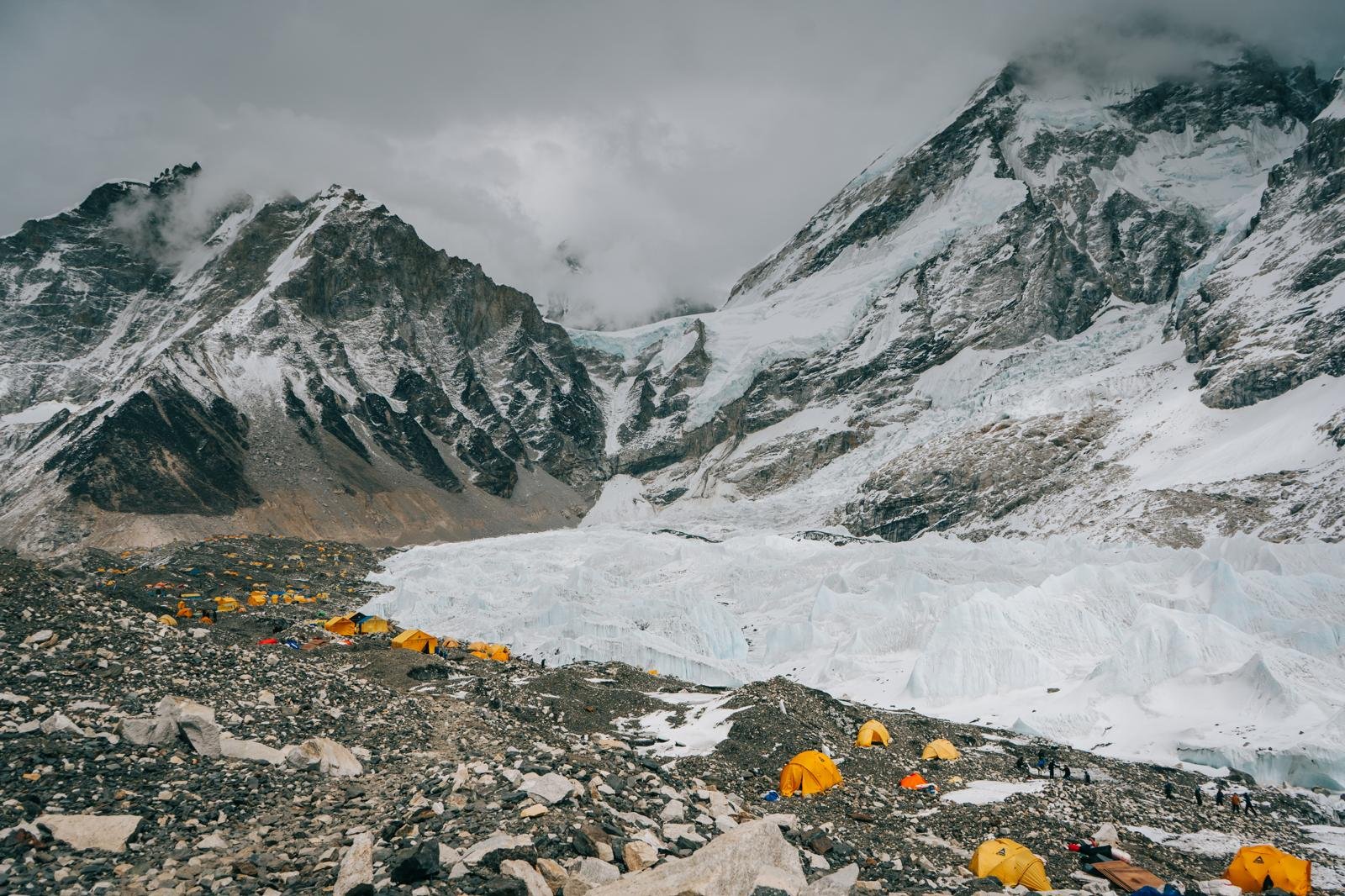
Our base camp is as luxurious, if not more so than some of the other more expensive operators and the food prepared by our highly experienced cooks is considered some of the best available in the Himalayas.
Each climber is provided with a personal Mountain Hardwear 3-person tent at base camp/box tents, which is insulated with a foam floor covering and complimented with an extra thick foam mattress.
For group occasions we provide double walled tents for dining and another as our communication tent. The dining tent has large padded chairs and is spacious, carpeted, heated and lit by solar electricity. Our recreation tent has the same facilities as our dining tent.
We provide a carpeted and solar-lit toilet and shower tent with toilets, stainless steel wash sinks and hot water heated showers. We make it a policy at Altitude Junkies to remove all human waste from base camp and camp two respectively and have porters carry our toilet drums to a lower village where it can be disposed of properly.
Climb Strategy
We use the classic Northwest Face/West Pillar route on Makalu. Our expedition strategy is built around gradual acclimatization, establishing the higher camps efficiently, and allowing sufficient time for weather and route conditions before committing to the summit push.
The Route
Base Camp (4,870 m): Our main acclimatization and logistics hub, where we prepare for the climbing phase.
Camp 1 (6,150 m): Established above the lower glacier section, providing the first high-altitude camp.
Camp 2 (6,700 m): Located higher on the route as we progress toward the Makalu La.
Camp 3 (7,400 m): Positioned near the Makalu La and used as an important staging point for the upper mountain.
Camp 4 (7,800 m): Our high camp and launch point for the summit attempt.
Summit Day (8,485 m): An early start takes us through steep snow and ice terrain toward the summit ridge and the final exposed section leading to the summit of Makalu.

High Altitude Camps
3-person tents will be used at high camps and these will be occupied by two persons. All high altitude food, stoves and cooking gas will be in place and members are only required to carry their own personal gear during the expedition.
Itinerary
Day 1
Kathmandu (Hotel)
Day 2
Kathmandu final preperation
Day 3
Helicopter Flight to Namche (Teahouse)
Day 4
Namche acclimatization – 6 hrs
Day 5
Trek to pangboche – 6/7 hrs
Day 6
Trek to dingboche – 2 hrs
Day 7
Dingboche acclimatization – 4/5 hrs
Day 8
Trek to lobuche
Day 9
Trek to Gorakshep and trek to EBC back to gorakshep– 7 hrs
Day 10
Hike to kalapathar and trek down to pangboche
Day 11
Day 12
Day 13-40
Day 41
Day 42
Day 43
Fly to Makalu high Camp
Rest at Base camp
Climbing Period
Fly from Base camp to Kathmandu
Kathmandu
International Departure
Expedition Gear

Insurance
Climbers are required to have evacuation and medical insurance and we recommend using Global Rescue
Cost Includes
- Single accommodation with breakfast in Kathmandu as itinerary
- All transportation in Nepal as itinerary
- Helicopter flight as per itinerary
- Porters for 30kg personal gear to base camp and return
- All meals during trek and expedition (B/L/D) with tea/coffee
- All meals at base camp
- Personal Nepal climbing Sherpa with all expenses (Sherpa’s)
- Expedition permit, peak fee and conservation fees
- Liaison Officer expenses, rope fixing,
- Garbage Deposit
- High camp with tents, gas burner, cooking kit, ropes, ice screws & high- altitude food
- Oxygen(4:2 ratio) and Perosnal Summit Mask
- Walkie-talkies (BC to high camp) & emergency
- Backup oxygen & regulator set available at base camp (chargeable if used)
Cost Excludes
- International airfare.
- Meals and drinks in Kathmandu
- Nepal entry visa fee (45 days).
- Drone or special filming permits.
- Alcoholic beverages in Kathmandu
- Bottled beverages, showers and snack food on trek
- Nepal visa costs
- Evacuation costs, medical and rescue insurance
- Personal climbing clothing and equipment
- Personal Puja contribution
- Any services not mentioned under “Cost Includes.”
Altitude Junkies (P) Ltd. does not allow any solo climbing above base camp on any of our expeditions.
Price:
Duration:
Difficulty:
Location:
$ 26,800
45 Days
Advanced
Nepal

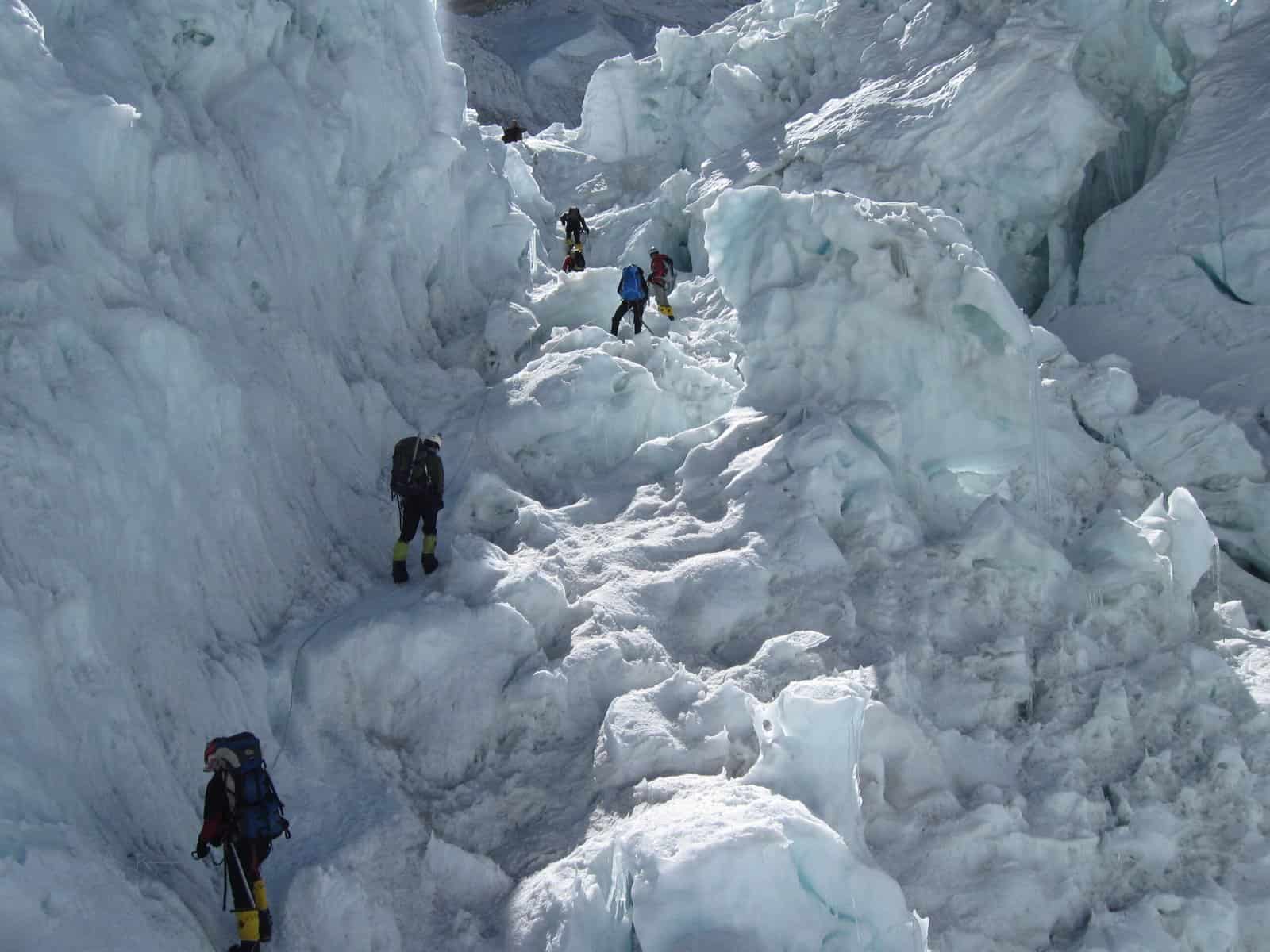
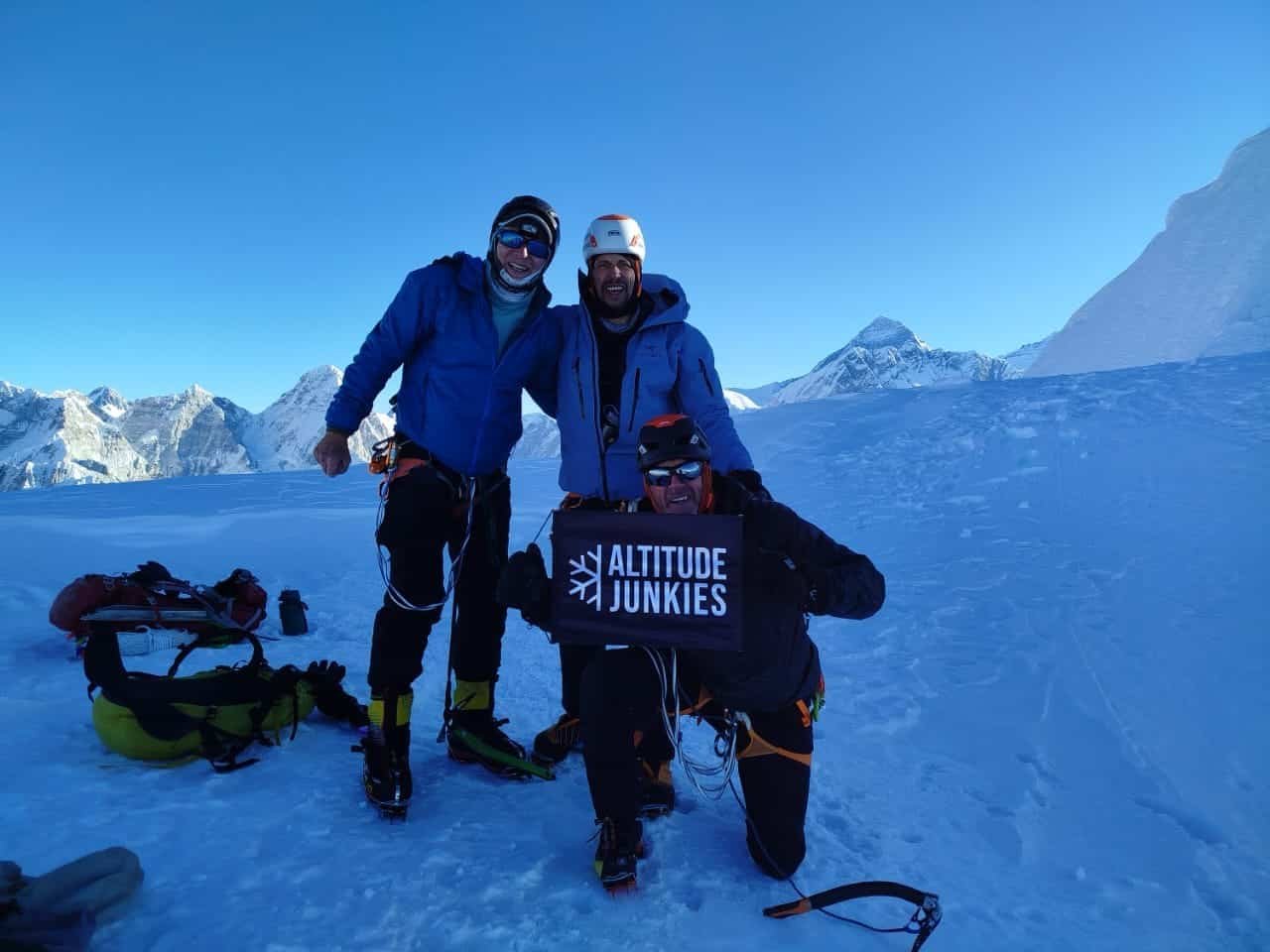
Expedition Photo Gallery
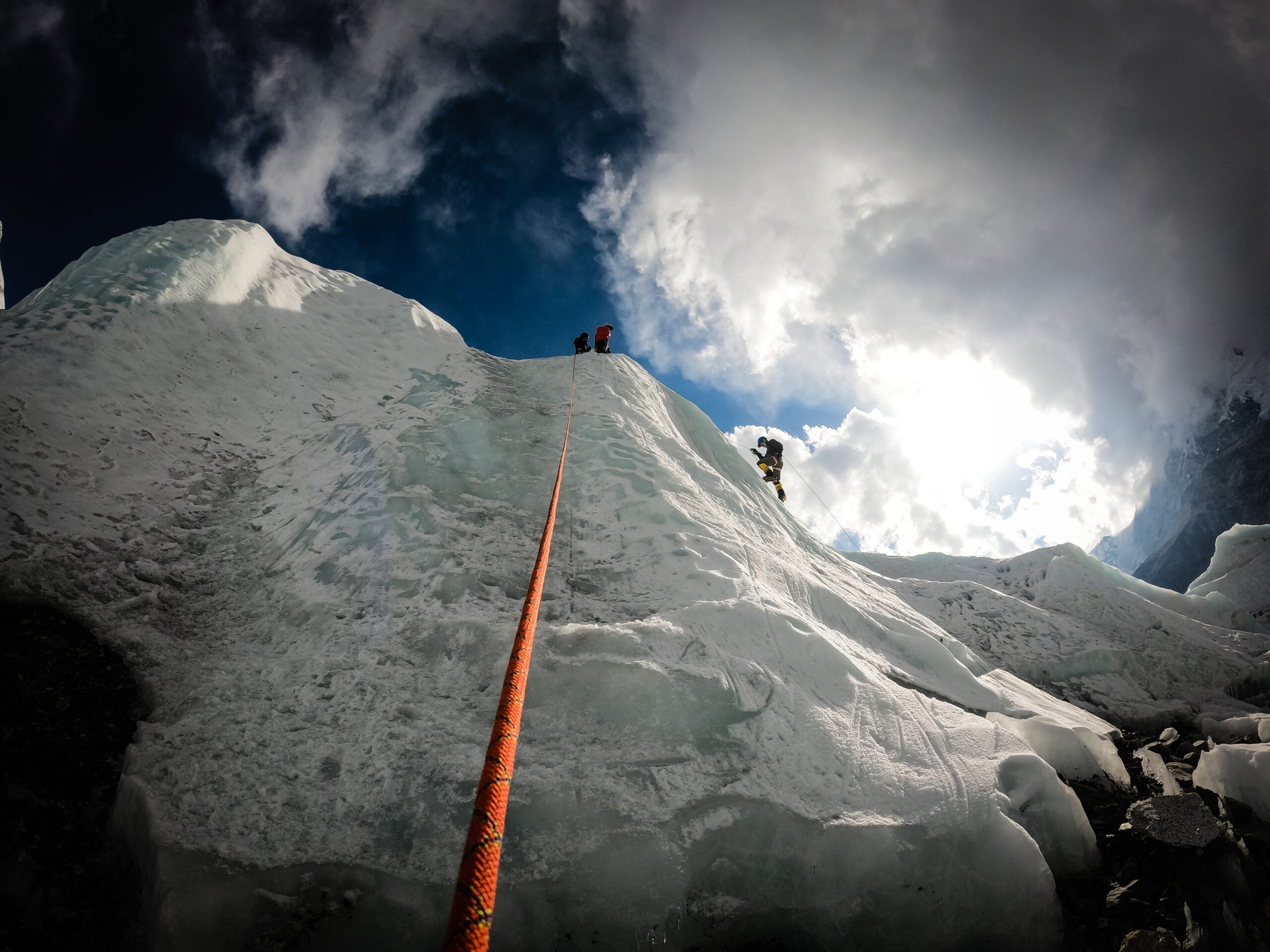
From technical ice steps above Camp 3 to the final Northwest Ridge summit push, explore real moments captured on our guided Mt. Makalu expeditions.


Makalu Expedition FAQs: Essential Climbing Tips & Gear
Get essential answers on expedition costs, 1:1 Sherpa ratios, oxygen allocations, climbing requirements, and Northwest Ridge route logistics for our full-service Makalu summit strategy.
What makes a Makalu expedition different from other Himalayan climbs?
Makalu is known for its remote approach, steep terrain, exposed upper mountain, and demanding weather windows. Unlike more frequently climbed peaks, it can feel less crowded and less predictable, which means self-sufficiency matters. Climbers should be comfortable moving on snow, ice, mixed ground, fixed ropes, ladders if used, and exposed ridges while carrying expedition loads.
The practical difference is decision-making. You need the fitness to climb when conditions are good, but also the restraint to turn around when wind, fatigue, or avalanche risk changes the plan. Strong logistics help, yet the mountain still rewards climbers who prepare for delays, cold camps, and repeated rotations.
How fit do I need to be before joining a Makalu expedition?
You should arrive with strong aerobic endurance, leg strength, pack-carrying ability, and proven experience at altitude. General gym fitness is not enough on its own; you need long, steady days in the mountains and the ability to recover overnight. Training should begin months ahead and include uphill hiking, stair work, strength sessions, mobility, and recovery weeks.
A useful preparation checklist includes:
– Long hikes with a weighted pack on uneven terrain
– Back-to-back endurance days to simulate expedition fatigue
– Strength work for legs, core, shoulders, and posterior chain
– Practice using crampons, ascenders, descenders, and gloves together
– Sleep, nutrition, and hydration routines that you can repeat consistently
What are the most important high-altitude tips for Makalu?
The best high-altitude tips are simple but difficult to follow: climb gradually, eat even when appetite drops, drink regularly, protect sleep, and speak up early about symptoms. Acclimatization rotations are not wasted time; they are the process that gives your body a chance to adapt. Rushing higher because you feel strong can create avoidable risk later.
Pay attention to headaches, nausea, unusual breathlessness, poor coordination, confusion, persistent cough, or extreme fatigue. These signs should be discussed with guides immediately. Medication, oxygen, rest, or descent decisions must be made by qualified expedition leaders and medical professionals, not by ego or summit pressure.
What gear should I prioritize for Makalu?
Prioritize warmth, reliability, and systems you have tested before the expedition. Your boots, gloves, suit, sleeping setup, eye protection, and technical hardware must work in severe cold and high winds. Small gear failures become big problems when dexterity is poor, and camps are far apart. Explore our complete expedition gear guide for detailed packing lists and technical requirements.
Core items usually include:
– Expedition down suit or layered high-altitude clothing system
– Double or triple boots suitable for extreme cold
– Multiple glove layers, including high-altitude mitts
– Crampons, harness, helmet, ascender, descender, carabiners, and safety lanyards
– High-quality goggles, glacier glasses, headlamps, and spare batteries
– Cold-rated sleeping bag, insulated mats, and personal repair items
How should I pack without carrying too much?
Pack around function, not fear. Every item should solve a clear problem: warmth, safety, hydration, navigation support, repair, hygiene, or nutrition. Duplicate only the essentials that are hard to replace, such as gloves, batteries, eyewear, and critical medications.
Before departure, test your full system on cold training days. Confirm that your layers fit together, your pack carries well, your boots do not create hot spots, and your technical tools can be operated with gloves. Label gear, waterproof key items, and separate camp equipment from rotation equipment so you can find things quickly when tired.
When should I choose a guided expedition instead of climbing independently?
Most climbers should choose a reputable guided or fully supported expedition unless they already have extensive 8,000-meter, expedition-planning, rescue, and high-altitude logistics experience. Makalu involves route conditions, weather calls, permits, camps, loads, communications, and emergency planning that are difficult to manage alone.
When comparing operators, ask about guide experience, acclimatization strategy, oxygen policy, rescue planning, weather forecasting, communication systems, group size, and what gear or services are included. The cheapest option is rarely the best measure of value on a mountain where safety margins matter. To evaluate which model suits your background, read our comparison of guided vs. independent expeditions.

Customer Reviews
“

 using WordPress and