
Who Fixes the Ropes on Ama Dablam?
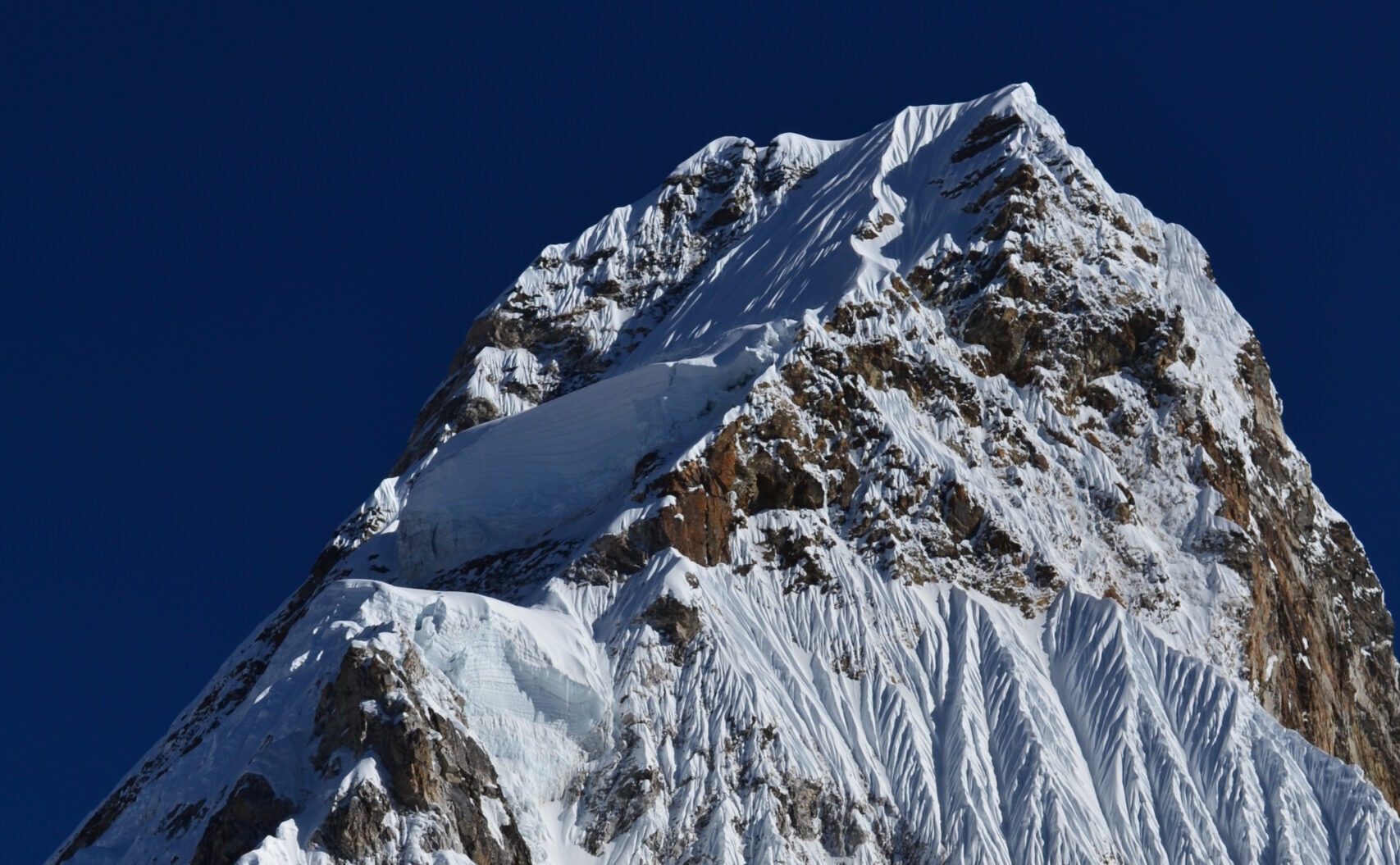
Ama Dablam, at 6,812m, is one of Nepal’s most iconic and technically demanding Himalayan expedition peaks. Although it is not an 8,000m mountain, its steep sections, exposed ridges, and mixed climbing make the fixed-rope system an important part of the standard climbing route.
For climbers preparing for an Ama Dablam expedition, one common question is:
Who actually fixes the ropes on the mountain?
The answer involves experienced Sherpa and high-altitude climbing teams who prepare the route before the main summit period.
Their work is an important but often overlooked part of an Ama Dablam expedition.
Why Are Fixed Ropes Important on Ama Dablam?
Unlike standard trekking peaks such as Island Peak or Mera Peak, Ama Dablam is a Department of Tourism-licensed expedition peak where climbers cannot simply walk to the summit.
The normal southwest ridge route involves:
- Steep snow and ice
- Exposed ridges
- Rock and mixed terrain
- Technical climbing sections
- Steep sections between the higher camps
Fixed ropes provide climbers with a protected line on many of the steeper sections.
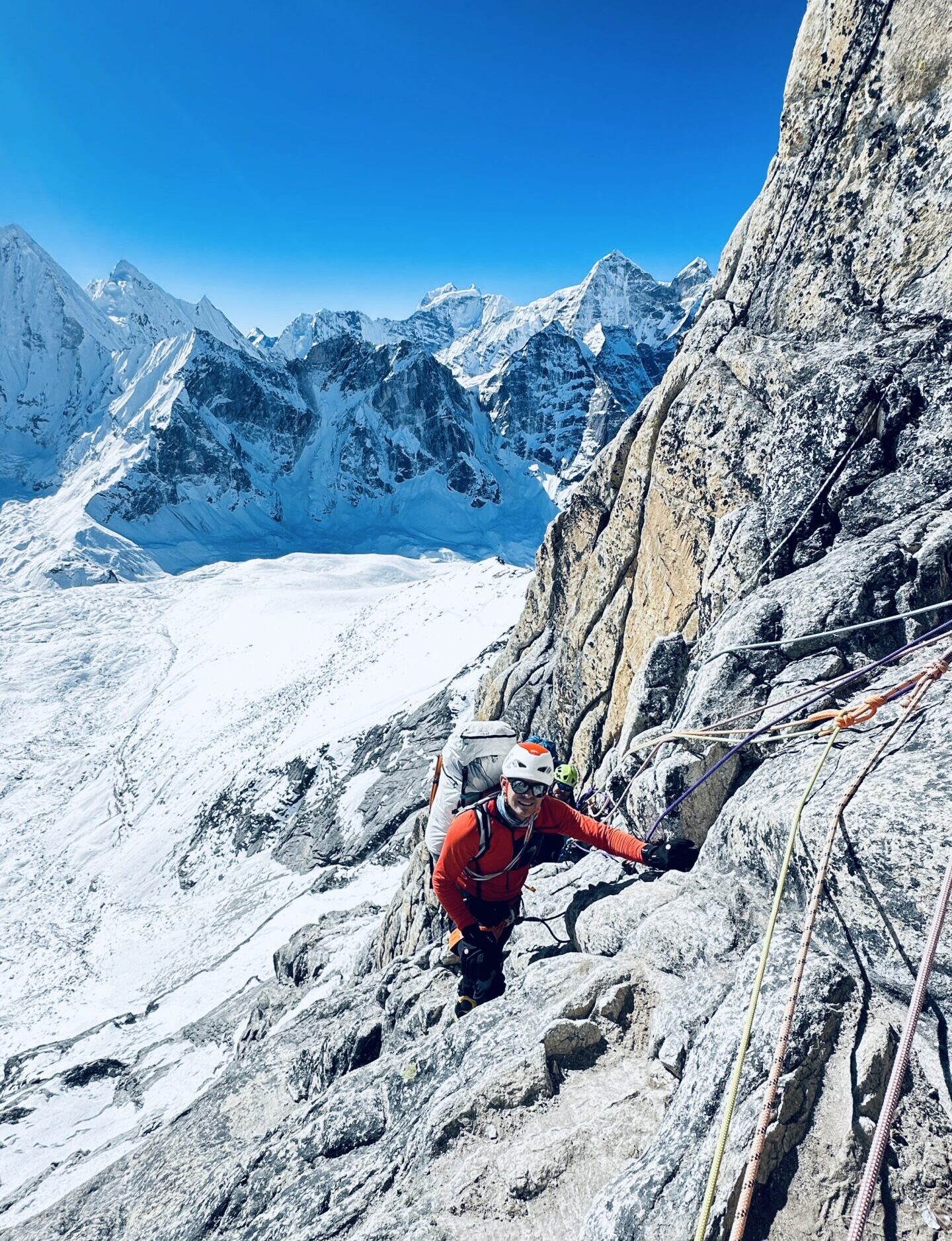
The standard Southwest Ridge route in the Khumbu region involves steep snow and ice, exposed knife-edge ridges like the Mushroom Ridge, and vertical rock and mixed terrain at the Yellow Tower and Grey Tower between Camp 1 and Camp 2.
Climbers normally use an ascender when moving upward and appropriate descending equipment when moving down.
The fixed line also makes the route more efficient for expedition teams carrying equipment between camps.
Who Fixes the Ropes?
The fixed ropes on Ama Dablam are generally established by experienced Sherpa climbers and specialized rope-fixing teams working on the mountain during the climbing season.
The exact organization can vary from season to season and between expedition operators.
On a popular commercial peak like Ama Dablam, rope fixing is typically coordinated through the Expedition Operators Association Nepal (EOA) and local Sherpa rope-fixing teams so that all permitted teams share a unified, reliable line during the autumn climbing season.
This means the rope-fixing team works ahead of the main groups and prepares the more technical sections before the primary summit period.
When Are the Ropes Fixed?
Rope fixing normally takes place after the climbing route has been assessed around the last week of September to 1st week of October and conditions are considered suitable.
The team may progressively work higher on the mountain rather than fixing the entire route in one operation.
A simplified process is:
Base Camp → route assessment → lower technical sections → higher camps → upper ridge → inspection and maintenance
Weather, snowfall, ice conditions and the technical state of the route can all affect when the work can safely be completed.
Where Are Fixed Ropes Used on Ama Dablam?
The exact location of fixed ropes can change depending on conditions and the route established during a particular season.
However, fixed lines are particularly important on the steeper technical sections of the Southwest Ridge, especially around the higher camps and summit route.
Ama Dablam’s upper mountain contains exposed climbing where a fixed line provides an important additional layer of protection and helps climbers move efficiently.
The route should never be assumed to be identical from one season to another.
How Are the Ropes Fixed?
The rope-fixing team first assesses the terrain and determines where protection is required.
The anchoring method depends on the surface.
Snow and Ice
Teams place ice screws, snow pickets, or buried deadman anchors where the route crosses steep glacial ice and snow slopes.
Rock
On steep granite sections like the Yellow Tower, fixers utilize pitons, expansion bolts, cams, and natural rock horns to establish bombproof anchor stations.
Existing Anchors
Where suitable, previously established anchor points may be inspected and incorporated into the route rather than creating an entirely new system.
The objective is to create a continuous and practical fixed line through the technical sections.
The Importance of the Anchor
When climbers see a fixed rope, they naturally focus on the rope itself.
However, the anchor is equally important.
The rope must be connected to a suitable protection system capable of handling the expected forces and repeated use.
The rope-fixing team has to consider:
- Quality of the rock or ice
- Direction of loading
- Rope position
- Number of climbers using the line
- Abrasion
- Snow and ice conditions
- Exposure
A strong rope attached to a poor anchor does not create a reliable fixed-line system.
How Do Climbers Use the Fixed Rope?
Once the route has been established, climbers normally remain connected to the fixed line while moving through the technical sections.
A typical system involves:
Climbing harness → safety tether (cow’s tail) → mechanical ascender (Jumar) → static fixed rope
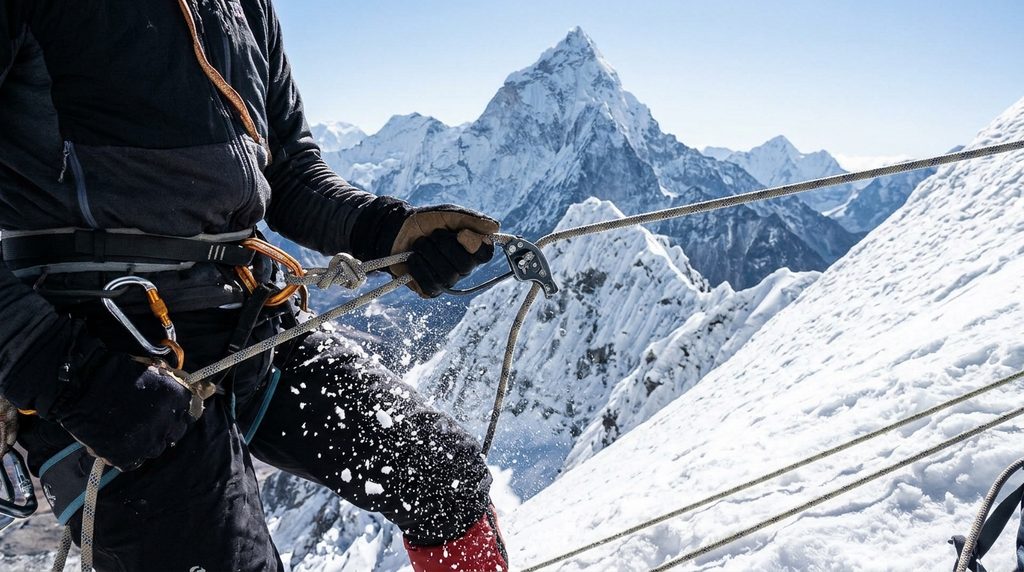
When climbing upward, an ascender allows the climber to move along the rope while maintaining protection.
At anchors or rope transitions, climbers need to manage their connections carefully so they remain appropriately protected.
This becomes particularly important on steep terrain where a mistake can have serious consequences.
Why Does Ama Dablam Require Skilled Rope Fixers?
Ama Dablam’s reputation comes partly from its technical character.
The route is steep and exposed, and conditions can change quickly.
Rope-fixing teams need experience in:
- High-altitude climbing
- Rock and ice protection
- Fixed-line systems
- Snow and ice assessment
- Route finding
- Anchor construction
- Rope management
The work is also physically demanding because it often requires carrying ropes, climbing equipment and other supplies to higher elevations before the majority of climbers arrive.
Does the Fixed Rope Make Ama Dablam Easy?
No.
This is an important distinction for climbers considering Ama Dablam.
Fixed ropes provide protection, but they do not remove the technical requirements of the mountain.
A climber still needs to understand:
- Ascender use
- Rope transitions
- Harness systems
- Crampon technique
- Ice axe technique
- Movement on steep terrain
- Basic alpine and mixed climbing
- High-altitude risk management
Ama Dablam should therefore not be approached simply as a mountain where someone can “clip into a rope and follow it.”
How Are the Ropes Maintained?
Fixed ropes remain exposed to the Himalayan environment throughout the season.
They can experience:
- Heavy snowfall
- Ice formation
- Rock abrasion
- Wind
- UV exposure
- Repeated climber traffic
- Anchor movement
Rope-fixing teams may therefore inspect the system and make repairs or adjustments when necessary.
On a busy commercial peak such as Ama Dablam, rope fixing is often coordinated across teams, and those shared route maintenance fees are factored into overall Ama Dablam expedition costs.
What Happens if Conditions Change?
Mountain conditions are never completely static, and rope-fixing teams rely heavily on updated Himalayan meteorological monitoring to inspect and repair fixed lines..
Fresh snow can cover anchors or ropes. Ice can change shape, rock can become exposed and sections of the route can become more difficult.
The rope-fixing team may therefore need to:
Inspect → repair → reposition → replace → extend
the fixed-line system as required.
This is one reason why the fixed route should always be treated as season-specific mountain infrastructure, rather than a permanent installation.
The Role of Sherpa Climbers
The rope-fixing operation highlights an important part of Himalayan mountaineering that visitors do not always see.
Experienced Sherpa climbers contribute far more than carrying equipment.
On Ama Dablam, skilled high-altitude workers can be involved in:
- Route preparation
- Fixed-rope installation
- Anchor construction
- Equipment carrying
- Camp preparation
- Route maintenance
- Supporting expedition teams
Their experience with the mountain environment is a major part of successful expedition operations in Nepal.
Ama Dablam Fixed Ropes vs 8,000m Mountains
Ama Dablam’s fixed-rope system should not be confused with the large-scale rope infrastructure found on mountains such as Everest.
On Everest, hundreds of climbers may use extensive fixed lines across multiple sections of the mountain.
Ama Dablam has a smaller climbing population, but the technical nature of the route makes fixed ropes particularly useful.
The key difference is that Ama Dablam is a technical 6,000m peak, whereas a Mount Everest expedition or an introductory 8,000m climb such as a Manaslu expedition operates in an 8,000m-plus environment with much greater altitude, traffic, and large-scale fixed-line infrastructure.
What Should Climbers Know Before Ama Dablam?
Before joining an Ama Dablam expedition, climbers should understand that the fixed rope is a tool, not a substitute for climbing skills.
You should be comfortable with:
- Using an ascender
- Clipping into fixed lines
- Managing rope transitions
- Using crampons on steep terrain
- Moving safely with an ice axe
- Climbing in exposed environments
- Working efficiently while wearing gloves
Training on a fixed rope before arriving in the Himalaya or gaining experience on comparable technical Khumbu peaks like a Cholatse expedition can make a significant difference.
Final Thoughts
The fixed ropes on Ama Dablam are the result of significant preparation and technical work carried out by experienced climbing teams.
Before expedition members begin their summit push, Sherpa and high-altitude rope-fixing teams have already assessed the route, established anchors, installed fixed lines, and prepared the technical sections.
For climbers, the fixed rope may look like a simple piece of equipment. In reality, it represents the combined work of route assessment, technical climbing experience, mountain knowledge, and careful expedition logistics.
Ama Dablam is a technical mountain, and the fixed-rope system is an important part of making the standard route manageable, but it never eliminates the need for proper climbing skills and experience.
At Altitude Junkies, our guided Ama Dablam expeditions prioritize transparency, safety, and respect for the Sherpa climbing teams who establish the route, ensuring every climber arrives prepared for the technical demands of the Himalayas.
 using WordPress and
Comments are closed